

It all began more than four hundred million years ago; two tectonic plates met, and from this meeting the Island of Groix was born.
Some call it "The Pebble of Brittany": 8 km by 3, it's small but it has plenty of charm. And the history of the island of Groix is certainly not lacking in that.
The origins
Etymologically, the island of Groix could have meant "the island of witches," from the Breton "Enez Ar C'hoaz'h." Yet, it's difficult today to understand how this peaceful islet in Brittany acquired such a reputation. However, in the«History of the island of Groix, Peace and quiet have not always been the rule on the island. The Viking occupation left its mark; a tomb, weapons, and a boat (the only Viking boat found on French territory) attest to this.
The earliest traces of settlement come from soldiers from the Isle of Britain (present-day Great Britain) who came to reinforce the Roman emperor in the 4th century. At the beginning of the 11th century, the island was part of a lordship of Hennebont before being generously given to the Abbey of Sainte-Croix in Quimperlé. The abbey brought Christianity to the island, building churches, chapels, and various shrines. The term "Loc" meaning "place of worship," the first villages were built in honor of the saints. Thus, in the 12th century, the first villages of Locmaria, Loctudy (present-day Bourg), and Locqueltas developed. The island of Groix was then threatened by the English during the 17th and 18th centuries, but these threats were always repelled (thank God, I don't speak English!).
France's leading tuna port
Over the centuries, maritime trade developed; the island of Groix thus became the leading tuna port in France at the beginning of the 20th century. This pride went so far as to replace the traditional rooster on the church steeple with… a tuna (!) still visible at the top of the church in the town center.
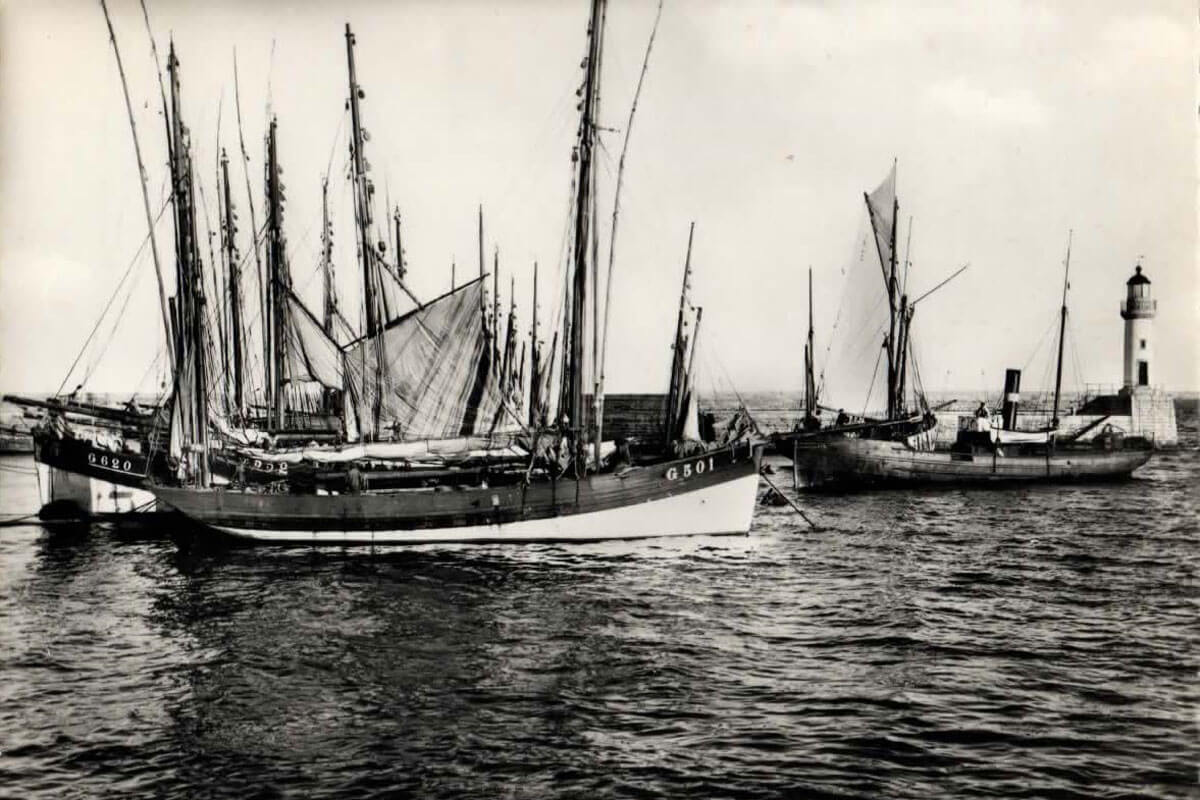
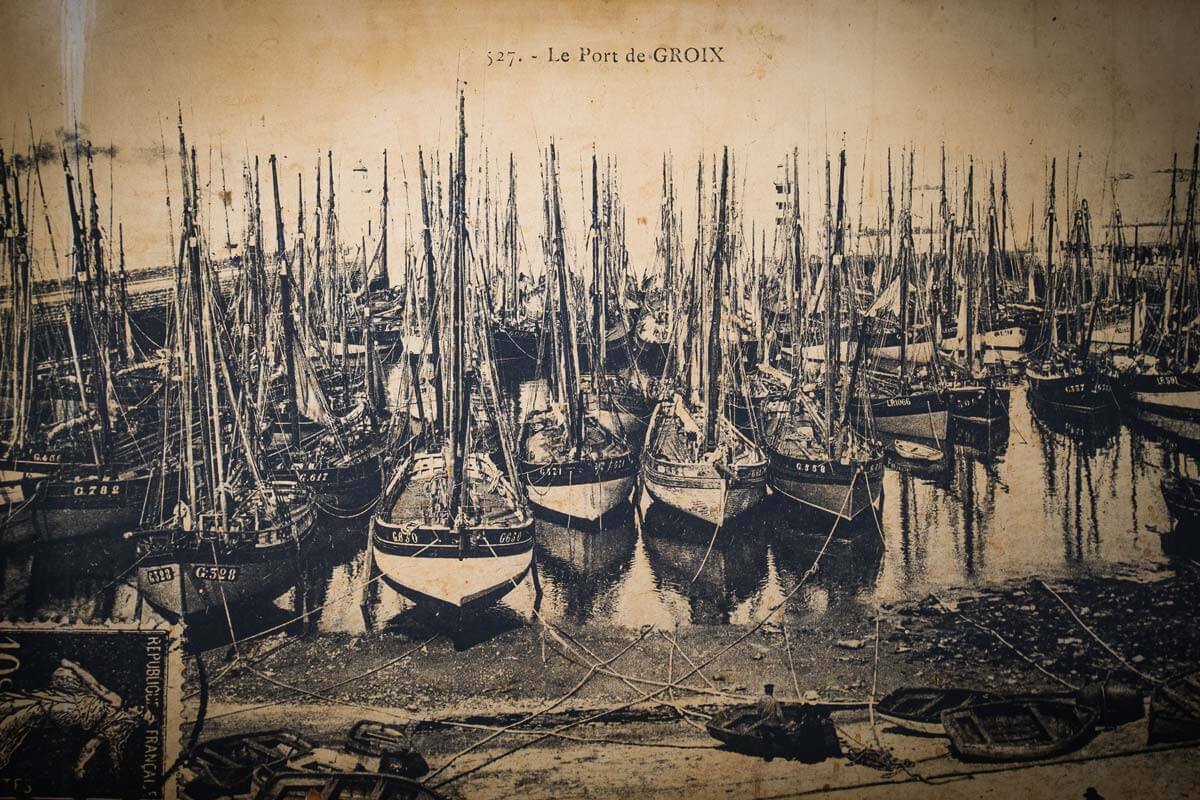
The end of the 20th century was a turbulent period. This is still evident today when strolling along the cliffs of Pen-Men; the Second World War had a significant impact on the island of Groix. Numerous bunkers served as shelters for the Germans during the occupation, and the island was used as an ammunition depot.
Witch Island…?
The history of Groix has been shaped by beliefs, religions, maritime and agricultural activities, and a world war… But why did it ultimately become known as «the island of witches»? Breton textbooks, filled with legends, told me the story. In the 18th century, when an English troop was about to ravage the island of Groix, a priest displayed a clever strategy. With all the men out fishing, only the women remained, facing danger and unable to defend themselves. The cunning priest instructed the women to gather on the island's heights, covering their heads with seaweed. Mounting their draft horses and cows, the women armed themselves with long sticks, following the priest's instructions. From the English ships, the enemy, frightened by this mass of women resembling a herd of dragons, fled.
Rest assured, today only families, couples in love, groups of friends, or solo travelers have survived…! For Learn more about the island of Groix Nowadays, you can read our article on Spring in Groix.
Thanks to Jo Le Port and José Calloc'h for their fascinating stories which enabled us to write this article on the history of the island of Groix.